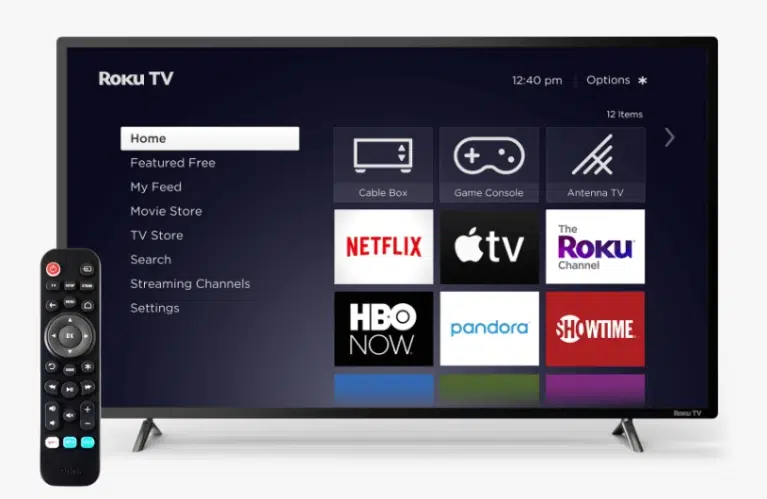
QLED or ULED: Which Should You Choose for 2025?
In 2025, there are two exciting options for TV display technology: QLED and ULED. These advanced technologies offer different ways to create stunning visuals in your living room.
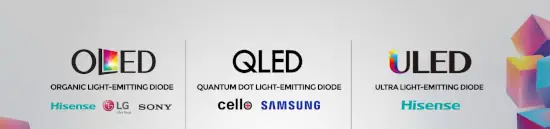
QLED, developed by Samsung, uses quantum dot technology to produce vibrant colors and exceptional brightness. It does this by using special nanocrystals. These nanocrystals improve the LED panel backlight. This leads to better color accuracy and a wider range of colors.
On the other hand, ULED is Hisense’s proprietary technology that combines multiple innovations, such as:
- Ultra Local Dimming
- Ultra Wide Color Gamut
- Ultra 4K Resolution
- Ultra Smooth Motion Rate
Choosing between QLED and ULED will affect your viewing experience in several ways:
- Picture quality and color accuracy
- Gaming performance
- HDR capabilities
- Value for money
- Long-term satisfaction
The display technology you choose will influence how you enjoy movies, games, and everyday content. By knowing the special benefits of QLED and ULED, you can make a smart choice that fits your needs and viewing habits.
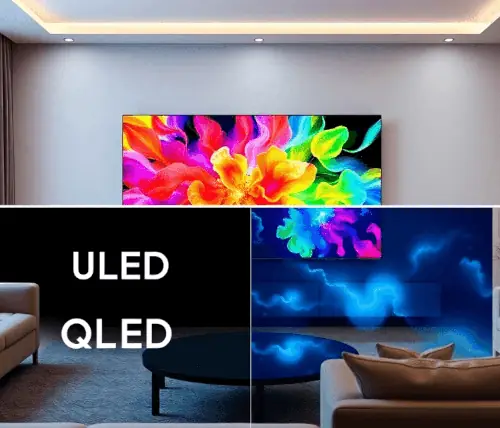
Understanding OLED, QLED, and ULED Technologies
OLED Technology
OLED TVs represent a revolutionary approach to display technology. Each pixel in an OLED panel functions as its own light source, creating images through self-emissive organic compounds. This unique characteristic enables:
- Perfect Blacks: Individual pixels turn completely off
- Infinite Contrast: The difference between the brightest and darkest points
- Quick Response Time: Pixels change states almost instantly
The drawbacks of OLED include potential screen burn-in and lower peak brightness compared to other technologies.
QLED Technology
QLED displays use quantum dot technology to enhance traditional LED backlighting. A specialized quantum dot layer sits between the LED backlight and the screen, transforming blue light into pure red and green colors. This results in:
- Superior Brightness: Ideal for well-lit rooms
- Vibrant Color Production: Wider color gamut coverage
- Extended Lifespan: No risk of burn-in
- Cost-Effective Manufacturing: Lower production costs
When considering the pros and cons of QLED TVs, it’s essential to note their exceptional brightness and color accuracy, making them ideal for HDR content and vibrant viewing experiences.
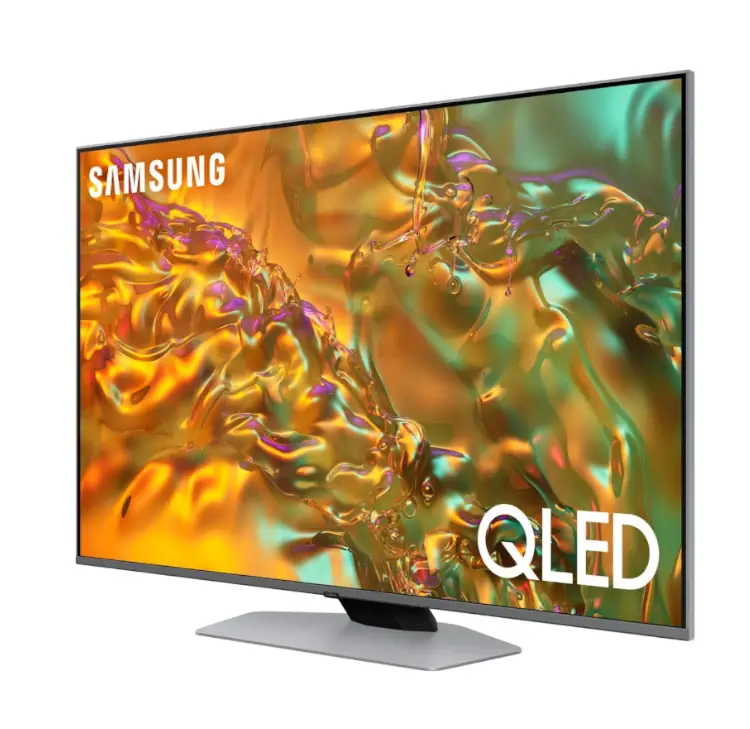
QLED vs OLED display showdown — how QLED compares to OLED.
ULED by Hisense
ULED technology combines multiple proprietary innovations to deliver enhanced picture quality. Hisense’s approach incorporates:
- Ultra Local Dimming: Precise control of backlight zones
- Ultra Wide Color Gamut: Rich, accurate color reproduction
- Quantum Dot Enhancement: Similar to QLED color processing
- Motion Rate Technology: Smooth action sequences
The ULED system processes images across multiple zones, creating deeper blacks and brighter highlights while maintaining color accuracy. This technology targets the sweet spot between premium performance and accessibility, offering many high-end features at a more competitive price point.
When evaluating the pros and cons of ULED TVs, consider their ability to deliver impressive picture quality while often being more budget-friendly than their QLED counterparts.
Comparing QLED and ULED Technologies
QLED and ULED technologies have different strengths when it comes to picture quality and energy performance. Let’s take a closer look at what sets them apart in this ULED vs QLED comparison:
Picture Quality Characteristics
- QLED delivers superior brightness levels, reaching up to 2,000 nits in premium models
- ULED typically achieves 1,000-1,500 nits brightness range
- Both technologies offer quantum dot enhancement for color accuracy
- QLED presents wider color gamuts, displaying 100% of the DCI-P3 color space
- ULED achieves approximately 90-95% of the DCI-P3 color space
Smart TV buying tips — what to consider before buying a TV.
Energy Efficiency and Production
- QLED TVs demonstrate 15-20% lower power consumption compared to ULED
- Production costs for QLED panels are higher due to Samsung’s proprietary technology
- ULED manufacturing costs remain lower, resulting in more budget-friendly options
- Power efficiency ratings:
- QLED: Average 100-150 watts for 65-inch models
- ULED: Average 120-170 watts for similar sizes
Value Proposition
- QLED commands premium pricing due to advanced quantum dot implementation
- ULED offers competitive features at more accessible price points
- Both technologies provide excellent HDR performance
- Local dimming capabilities vary by specific model rather than technology type
The differences between these technologies become clear when you watch TV in real-life conditions. In bright rooms, QLED has an advantage, while ULED performs well in various lighting situations.

Gaming-Friendly Features in QLED vs ULED TVs
Modern gamers demand specific features from their TVs, and both QLED and U LED technologies rise to meet these requirements in different ways.
QLED Gaming Features:
- 120Hz native refresh rate
- Variable Refresh Rate (VRR) support
- 4-8ms input lag at 4K/120Hz
- AMD FreeSync Premium Pro
- Auto Low Latency Mode (ALLM)
Latest Samsung TVs for 2025 — new Samsung display technologies.
ULED Gaming Features:
- Up to 144Hz refresh rate on select models
- Game Mode Pro with VRR support
- 6-10ms input lag at 4K/120Hz
- AMD FreeSync compatibility
- ALLM support
QLED TVs excel in motion handling with their advanced processing capabilities, delivering crisp imagery during fast-paced gaming sessions. The technology’s superior brightness helps maintain visual clarity in HDR games.
ULED TVs compete strongly in the gaming space with their Game Mode Pro feature. Hisense’s implementation of HDMI 2.1 features ensures compatibility with next-gen gaming consoles. The slightly higher input lag compared to QLED is barely noticeable during regular gameplay.
Both technologies support crucial gaming features, such as VRR and ALLM, making either choice viable for gaming enthusiasts. The real difference lies in specific model implementations rather than the core technology.
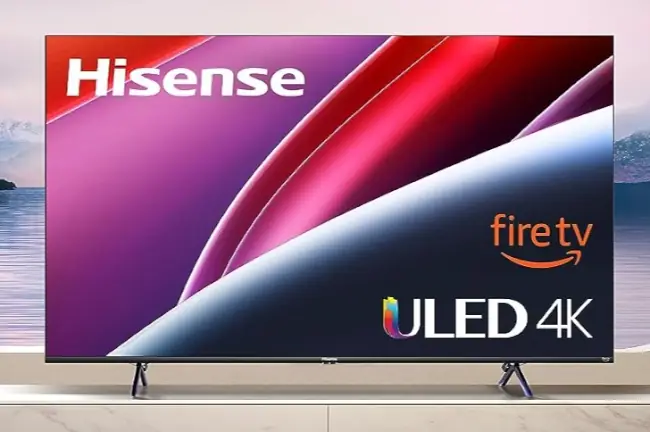
Factors to Consider When Choosing Between QLED and ULED TVs for 2025
1. Budget
Your budget plays a crucial role in selecting between Q LED and U LED technologies. U LED TVs typically offer a more cost-effective entry point into premium display features, with prices ranging from $500 to $2,000 for most models. Q LED TVs, particularly from established brands like Samsung, command higher price points, starting at $800 and reaching up to $3,000 for larger sizes.
The cost difference stems from manufacturing processes:
- QLED Production: Advanced quantum dot technology
- Premium brand research and development
- Higher-grade materials
- Established quality control systems
- ULED Production: Streamlined manufacturing process
- Cost-effective component sourcing
- Efficient production scaling
- Competitive market positioning
2. Viewing Needs
Your specific viewing needs should guide your decision beyond price considerations. Q LED displays excel in:
- Bright room performance
- HDR content viewing
- Color accuracy
- Premium sports watching
ULED strengths include:
- Value for money
- Good dark room performance
- Balanced feature set
- Entry-level HDR capabilities
3. Room Lighting Conditions
Room lighting conditions significantly impact your viewing experience. QLED’s superior brightness makes it ideal for well-lit spaces, while ULED performs admirably in moderately lit environments. The viewing distance also affects your choice – Q LED’s enhanced clarity becomes more noticeable when sitting closer to larger screens.
4. Content Preferences
Consider your content preferences, too. If you primarily stream HDR content or watch sports, Q LED’s superior brightness and color handling might justify the higher investment. For mixed-use scenarios including casual viewing and gaming, U LED offers compelling value without compromising essential features.
How Samsung handles dead pixels — warranty rules for dead pixels.
Brand Preference, Availability, and Your Final Decision on QLED vs ULED TVs in 2025
Brand reputation plays a significant role in TV selection. Samsung’s QLED technology is well-known in the premium TV market. It has a strong reputation due to years of innovation and quality control. Hisense’s ULED offers compelling value, gaining recognition for reliability and performance.
Key Brand Considerations:
- Samsung QLED TVs feature extensive quality testing and premium build materials
- Hisense ULED delivers competitive features at lower price points
- Samsung offers a wider model selection across different price ranges
- Hisense provides excellent warranty coverage and customer support
Making Your Choice:
Pick QLED if you value:
- Premium build quality
- Extensive model options
- Samsung’s ecosystem integration
- Higher resale value
Choose ULED if you prioritize:
- Budget-friendly pricing
- Good value-to-performance ratio
- Gaming-specific features
- Competitive warranty terms
The best choice depends on your specific needs. QLED suits those seeking premium features and brand prestige, while ULED satisfies practical needs with solid display features and affordability.