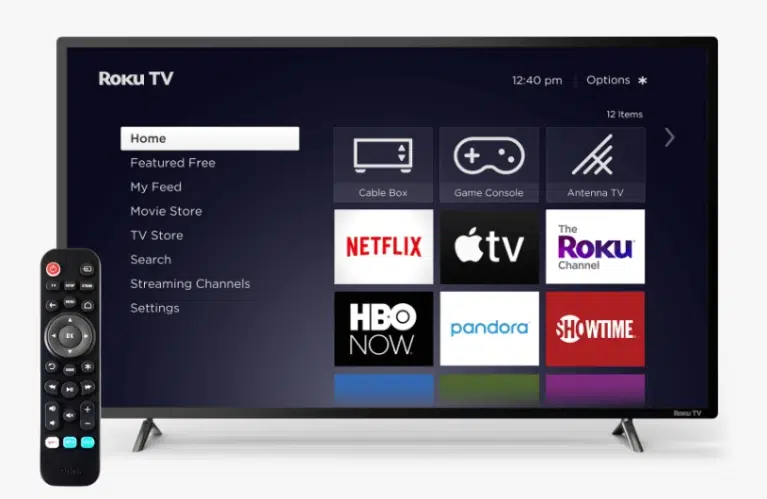
The Best TV Antennas for Crystal Clear Reception in 2025
TV antennas have made a strong comeback in 2025. Millions of households are finding the benefits of free, high-definition TV. The rise of cord-cutting has led to more interest in digital TV antennas. These antennas provide clear reception without monthly fees.
The latest generation of high-definition TV antennas offers impressive features:
- Advanced ATSC 3.0 compatibility
- Sleek, modern designs
- Enhanced signal reception technology
- Simple plug-and-play installation
We have tested many popular TV antennas in different places. This will help you with a clear guide for 2025. Our research evaluates key factors like signal strength, channel count, and ease of setup to help you find the perfect antenna for your specific needs.
This comprehensive guide examines both indoor and outdoor options, breaking down the essential features you need to consider. You’ll discover detailed reviews of top-performing models and practical tips to maximize your viewing experience with the best TV antenna for your home.
Understanding TV Antennas: Indoor vs Outdoor
TV antennas come in two main categories: indoor and outdoor models. Each type serves specific needs and environments, making your choice crucial for optimal reception quality.
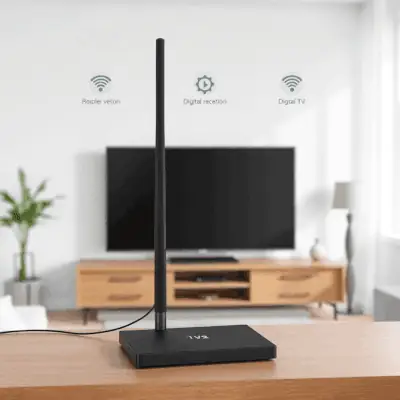
Indoor TV Antennas
Indoor antennas offer several advantages for urban and suburban viewers:
- Easy Installation: Set up takes minutes with no professional help needed
- Compact Design: Modern flat-panel designs blend seamlessly with home decor
- Portability: Relocate your antenna to test different positions for the best reception
- Cost-Effective: Prices typically range from $20 to $60
- Weather-Protected: Indoor placement eliminates exposure to elements
Popular indoor antenna models showcase innovative features:
Mohu Leaf
- Ultra-thin design (0.4 inches)
- 30-mile reception range
- Reversible black/white surfaces
- Multi-directional reception capability
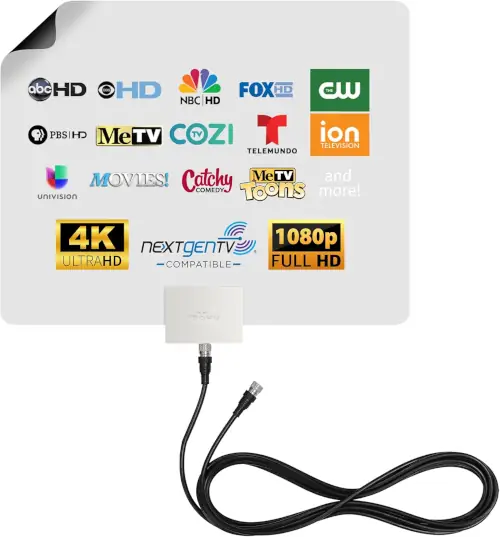
Mohu Leaf Plus Amplified Indoor TV Antenna, 60-Mile Range
Buy on Amazon
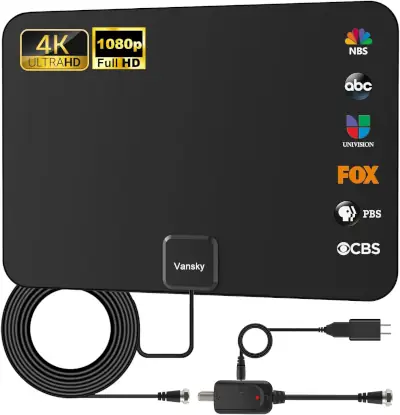
Channel Master FLATenna
- 13.5 x 9.6-inch profile
- Paintable surface for customization
- Detachable amplifier option
- Consistent performance within 20-30 miles
Buy on Amazon
Outdoor TV Antennas
Outdoor antennas excel in challenging reception environments:
- Superior Range: Capture signals from 60+ miles away
- Higher Channel Count: Access more channels due to elevated positioning
- Stronger Signal Quality: Less interference from building materials
- Better HD Reception: Clearer picture quality for HD broadcasts
Leading outdoor models include:
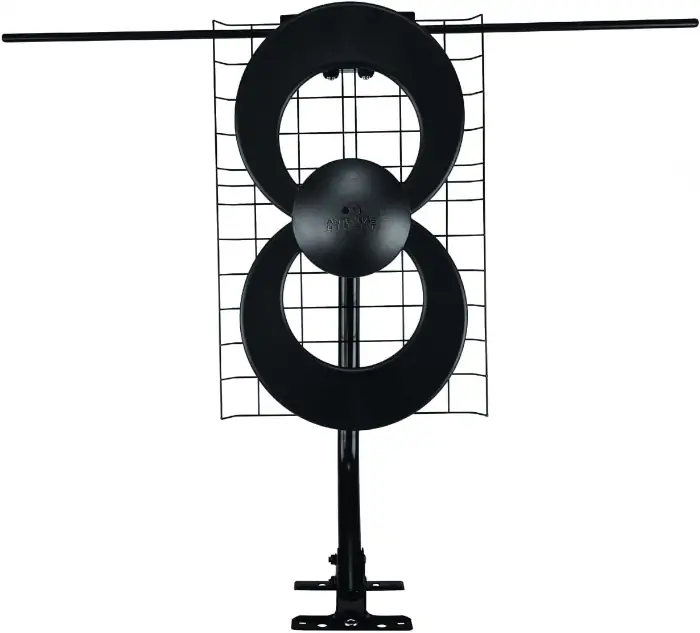
Antennas Direct ClearStream Eclipse
- Multi-directional reception
- Weather-resistant construction
- Built-in mounting hardware
- 70-mile reception range
Buy on Amazon
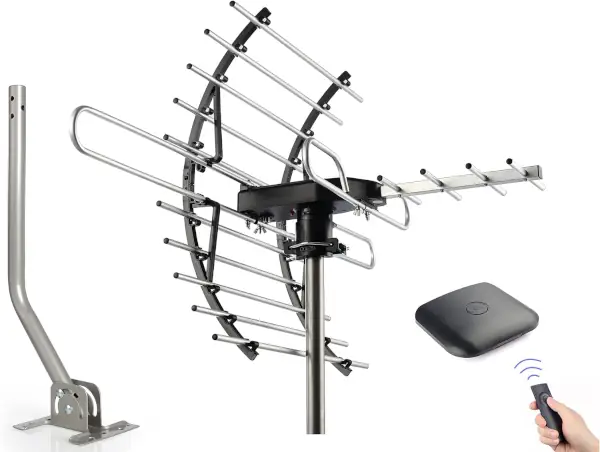
Channel Master MASTERPIECE
- 180-degree directional coverage
- 4K-ready design
- Aircraft-grade aluminum construction
- Integrated LTE filter
Buy on Amazon
Your location plays a vital role in antenna selection. Urban dwellers within 20 miles of broadcast towers often achieve excellent results with indoor antennas. Rural viewers typically benefit from outdoor models’ enhanced range and signal-pulling power.
Outdoor TV Antennas
Outdoor TV antennas deliver superior reception capabilities compared to their indoor counterparts. These robust devices capture signals from broadcast towers up to 150 miles away in optimal conditions, making them ideal for rural areas and regions with limited tower access.
Top-rated outdoor antennas for 2025:
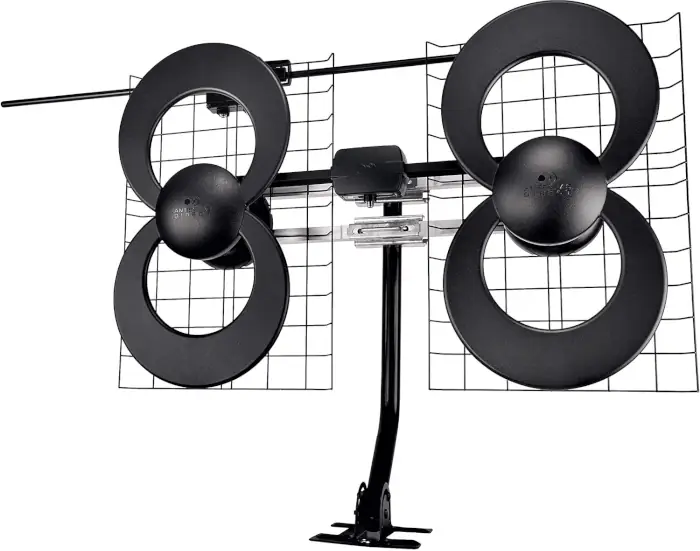
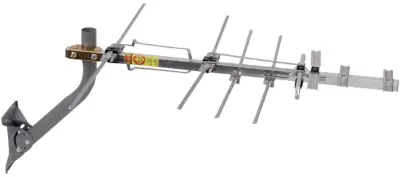
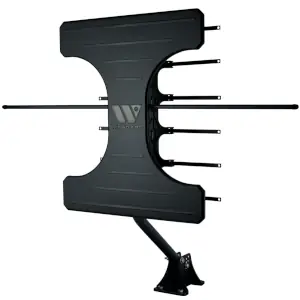
- Antennas Direct ClearStream 4MAX – Captures UHF/VHF signals from multiple directions with a 70-mile range
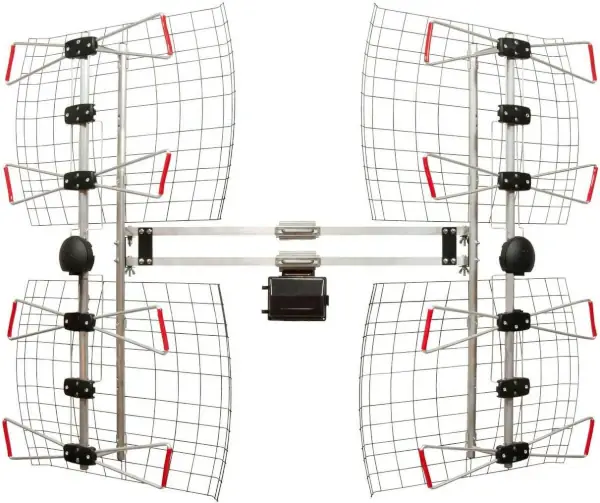
- Channel Master CM-4228HD – Eight-bay design excels at pulling in weak signals from distant towers
- RCA Compact Outdoor Yagi – Budget-friendly option with 70-mile range and durable all-weather construction
- Winegard Elite 7550 – Features built-in LTE filter and pre-amplifier for crystal clear reception
Buy on Amazon
Key advantages of outdoor antennas:
- Higher mounting position reduces signal interference
- Larger size enables better signal capture
- Weather-resistant construction ensures longevity
- Multi-directional reception capabilities
- Access to more channels than indoor models
Installation considerations:
- Mount the antenna at the highest possible point
- Point the antenna toward broadcast towers
- Use a signal meter to find optimal positioning
- Install a grounding wire for lightning protection
- Secure all mounting hardware against the wind
Attic installations offer a compromise between outdoor performance and aesthetic concerns. While signal strength may decrease by 40-50% compared to rooftop mounting, attic placement protects the antenna from harsh weather conditions and maintains your home’s exterior appearance.
If you are thinking about an attic installation, remember that it provides some protection from the weather. However, it might not be the best option for everyone. You can explore more about attic installations and their pros and cons in various online forums.
Professional installation is recommended for:
- Multi-story homes
- Complex roofing structures
- Long cable runs
- Areas requiring special mounting solutions
In terms of installation, certain guidelines should be followed to ensure optimal performance of the outdoor antenna. For instance, following specific construction standards can greatly enhance the effectiveness of your setup.
Key Features to Consider When Choosing a TV Antenna in 2025
Selecting the right TV antenna requires careful consideration of several critical features that directly impact reception quality and user experience.
1. Signal Range and Coverage
- Indoor antennas typically offer 20-30 mile reception range
- Extended range options reach up to 100 miles with amplification
- Signal strength decreases significantly with distance from broadcast towers
- Urban environments might require shorter-range antennas due to signal interference
2. Design Elements
- Flat panel designs fit discreetly on walls or windows
- Multi-directional antennas capture signals from various broadcast towers
- Reversible options feature black/white sides for aesthetic flexibility
- Compact designs (13-15 inches) balance performance with space efficiency
3. Amplification Technology
- Built-in amplifiers boost weak signals in fringe reception areas
- Detachable amplifiers allow customization based on location
- Signal boosters work best beyond a 20-mile range
- Potential signal distortion when used too close to broadcast towers
4. Cable and Connectivity Specifications
- Standard coaxial cable connections ensure universal compatibility
- Cable length options range from 10-25 feet
- Detachable cables enable flexible positioning
- USB power options for amplified models
- Some models feature app integration for optimal placement
5. Signal Quality Indicators
- Digital signal meters help optimize antenna placement
- LED indicators show reception strength
- Channel scanning capabilities identify available broadcasts
- ATSC 3.0 compatibility ensures future-proof performance
The physical environment significantly impacts antenna performance. Buildings, trees, and terrain can affect signal reception. High-quality antennas incorporate features like 4K compatibility, weather resistance, and smart technology integration to overcome these challenges.
Choosing the Right Antenna Based on Location and Viewing Needs (Rural vs Urban)
Your location plays a crucial role in determining the best TV antenna for your needs. Urban dwellers can often achieve excellent reception with simple indoor antennas, while rural residents might require more powerful solutions.
Urban Settings (within 15-20 miles of broadcast towers):
- Indoor antennas like the Best Buy Essentials HDTV Antenna deliver reliable reception
- Apartment buildings and condos benefit from window-mounted options
- Multi-directional antennas work well due to signal reflection off buildings
- Basic non-amplified models prevent signal overload
Suburban Areas (20-40 miles from towers):
- Mid-range indoor/outdoor antennas provide optimal performance
- Amplified indoor antennas like the Mohu Leaf can boost weaker signals
- Attic installations offer improved reception without visible outdoor equipment
- Directional antennas help minimize interference from multiple tower locations
Rural Locations (40+ miles from towers):
- Large outdoor antennas mounted high on rooftops maximize reception
- Long-range models like the Channel Master CM-4228HD capture distant signals
- Rotator systems allow antenna adjustment for different channel directions
- Pre-amplifiers are essential for maintaining signal strength over long cable runs
Before purchasing any antenna, use these tools to analyze your location:
AntennaWeb.org:
- Enter your address for a color-coded map of available channels
- Receive specific antenna recommendations
- View tower distances and directions
RabbitEars.info:
- Detailed signal analysis tools
- Real-world reception reports from other users
- Advanced mapping features for signal prediction
These tools help identify potential reception challenges and guide your antenna selection. Local terrain features like hills, dense forests, or large buildings can impact signal strength and might require adjustments to standard distance recommendations.
Installation Tips to Maximize Reception Quality
Proper antenna placement makes a significant difference in your reception quality. Here’s how to get the best signal from your TV antenna:
Window Placement
- Position your antenna on windows facing broadcast towers
- Higher floors typically receive better signals
- Keep the antenna away from metal window frames
- Test different window locations to find the strongest signal spot
Signal Interference Prevention
- Place antennas at least 3 feet away from metal objects
- Avoid mounting near LED/fluorescent lights
- Keep a distance from other electronic devices
- Remove metal screens from windows when possible
Indoor Placement Strategies
- Mount flat antennas vertically for UHF signals
- Try horizontal positioning for VHF channels
- Use longer coaxial cables to experiment with different locations
- Consider attic placement as a middle-ground solution
Signal Strength Optimization
- Run a channel scan after each position adjustment
- Test reception during different weather conditions
- Use an amplifier only when you’re 20+ miles from towers
- Check signal strength meters on your TV for precise positioning
Common Obstacles to Avoid
- Concrete walls
- Large furniture pieces
- HVAC equipment
- Thick insulation
- Metal roofing materials
For the best buy TV antenna indoor options, consider mounting locations that offer clear paths to broadcast towers. The best TV antenna setup often needs some trial and error. Don’t be afraid to try different spots before choosing a final position.
An amplifier can help boost weak signals, especially if you live far from the TV tower.
The Future of TV Antennas with ATSC 3.0 (NextGen TV) Compatibility
ATSC 3.0, known as NextGen TV, brings revolutionary changes to over-the-air broadcasting. The best OTA antennas in 2025 support these advanced features:
- 4K Ultra HD Resolution: Four times the clarity of standard HD
- HDR (High Dynamic Range): Enhanced contrast and color depth
- Dolby Atmos Audio: Immersive 3D sound experience
- Interactive Content: Real-time program information and enhanced emergency alerts
Your antenna choice directly impacts your ability to receive these next-generation features. The best over-the-air antennas designed for ATSC 3.0 include specialized signal processing capabilities to handle the complex digital streams.
Key ATSC 3.0 antenna requirements:
- Broader frequency response range
- Enhanced multipath handling
- Higher gain specifications
- Advanced filtering technology
Many broadcast markets have started ATSC 3.0 transmissions, with full nationwide coverage expected by 2026. The transition creates unique opportunities for cord-cutters to access premium content without subscription fees.
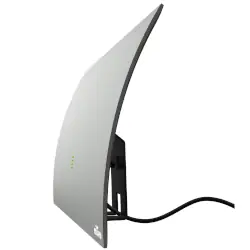
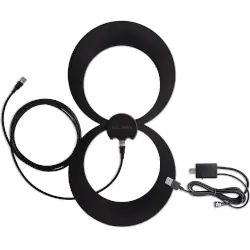
Popular ATSC 3.0-ready antennas like the Mohu Gateway Plus and Clearstream Eclipse 2 demonstrate exceptional performance with NextGen TV signals. These models feature advanced reception elements specifically tuned for the new broadcast standard’s enhanced capabilities.
Buy on Amazon
The technology enables personalized content delivery, targeted advertising, and enhanced mobile reception – features previously unavailable through traditional antenna TV.
Conclusion
Finding the best TV antenna for your home doesn’t have to be complicated. Your perfect match depends on your specific location, distance from broadcast towers, and viewing preferences.
The market offers diverse options in 2025:
- Indoor antennas like the Mohu Leaf deliver excellent performance for urban dwellers
- Outdoor antennas, such as the ClearStream Eclipse, suit rural locations
- ATSC 3.0-compatible models prepare you for next-generation broadcasting
The best HD TV antenna investment starts with understanding your needs. Take time to:
- Check your distance from local broadcast towers
- Consider your home’s construction materials
- Evaluate indoor vs. outdoor installation preferences
- Research signal strength in your area
Armed with this knowledge, you’re ready to make an informed choice. Remember – a quality antenna brings crystal-clear, free TV programming straight to your living room. Start exploring these options today to unlock a world of high-definition entertainment without monthly subscription fees.
FAQs (Frequently Asked Questions)
How do I choose the best TV antenna based on my location?
Choosing the right antenna depends on your distance from broadcast towers. For urban areas close to towers, an indoor antenna with moderate range suffices. Rural viewers farther away should opt for high-gain outdoor antennas with extended range capabilities. Utilize online tools like AntennaWeb.org or RabbitEars.info to identify available channels and determine signal strength in your area.
What key features should I consider when buying a TV antenna in 2025?
Important features include signal range and coverage—indoor antennas typically cover shorter ranges while amplified models extend reach. Design factors such as flatness, multi-directionality, and reversibility affect placement flexibility. Amplification can boost weak signals but may introduce interference. Also consider cable length and connectivity options to ensure compatibility with your setup.
Can indoor TV antennas provide high-definition (HD) reception?
Yes, many indoor digital TV antennas support high-definition reception if placed optimally near windows facing broadcast towers to minimize interference from walls or objects. Models like the Mohu Leaf are designed for HD signals within urban or suburban environments where signal strength is sufficient.
What installation tips can help maximize my TV antenna’s reception quality?
Place your antenna near windows that face broadcast towers to enhance signal capture. Avoid obstacles like thick walls or electronic devices that may cause interference. For outdoor antennas, secure mounting on rooftops or attics at elevated positions improves line-of-sight to transmitters and overall reception quality.
How does ATSC 3.0 (NextGen TV) impact my choice of TV antenna?
ATSC 3.0 introduces benefits such as 4K HDR broadcasts and interactive content, requiring compatible antennas for optimal performance. When selecting a new OTA antenna, consider models that support this new broadcast standard to future-proof your setup and enjoy enhanced picture quality and features in 2025 and beyond.
“As an Amazon Associate, we earn from qualifying purchases.”